
In This Article
The Marketing Automation Gap
Rolling out a major CRM update is one of the highest-risk, highest-reward activities in RevOps. Get it right, and you accelerate pipeline velocity. Get it wrong, and you create months of adoption friction and data chaos.
Here's a scenario that plays out at financial services firms every day:
A wealth management client just sold their business for $15 million. Their advisor knows. Their accountant knows. Their attorney knows.
The marketing team? They just sent an email promoting first-time investor seminars.
This disconnect isn't laziness or incompetence—it's a systems problem. Marketing automation platforms and client relationship systems rarely share data effectively. The result is marketing that's tone-deaf at best, relationship-damaging at worst.
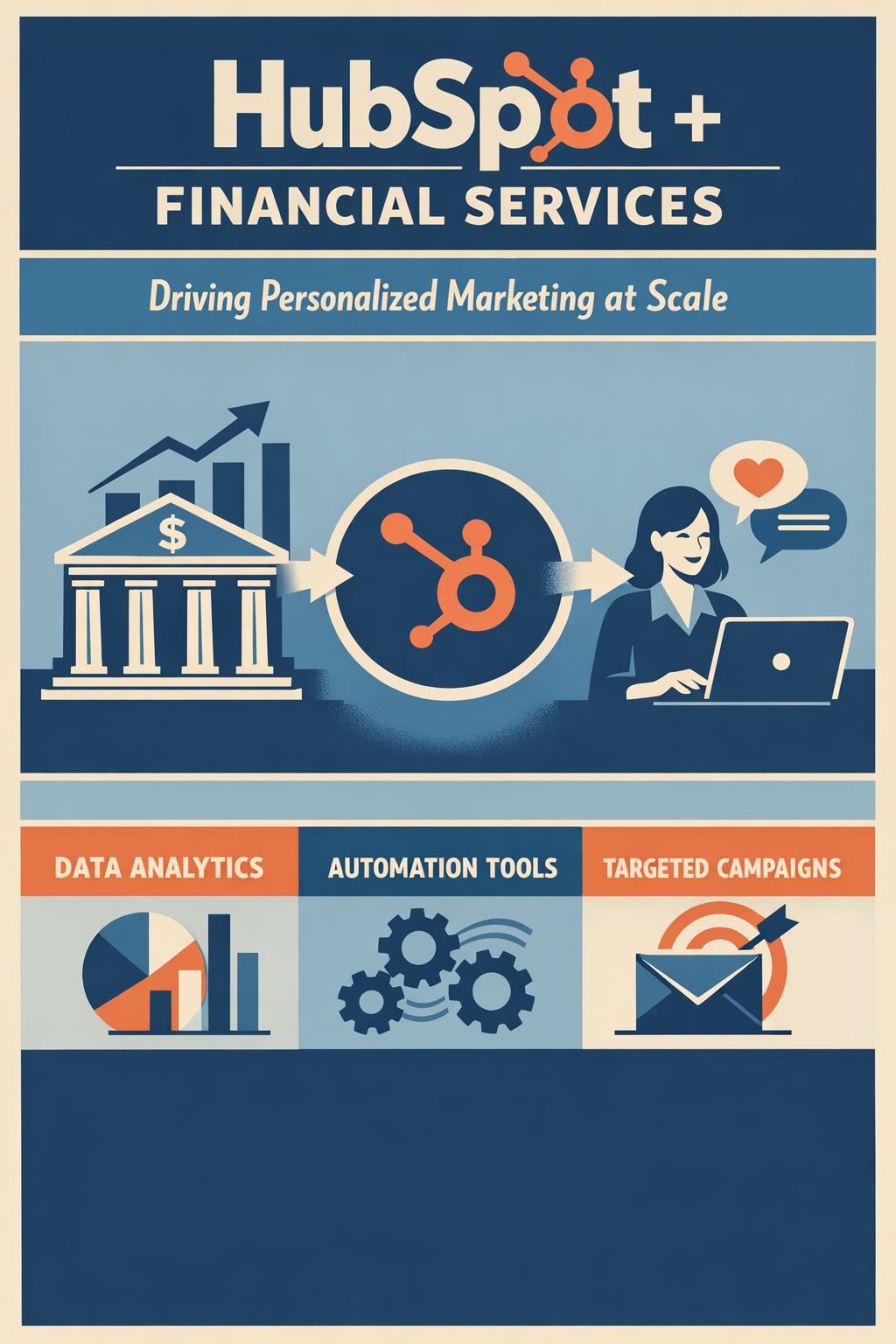
HubSpot, when properly integrated with financial services operations, bridges this gap. Combined with its Breeze AI capabilities, it enables personalized marketing that reflects actual client circumstances—not demographic assumptions.
Why HubSpot for Financial Services
HubSpot has evolved significantly from its small business roots. Today's enterprise platform offers capabilities specifically suited to financial services marketing:
Sophisticated Segmentation: Beyond basic demographic cuts, HubSpot enables behavioral and lifecycle-based segmentation. Target clients based on what they've done (website visits, email engagement, event attendance), not just who they are.
Compliance-Friendly Workflows: Financial services marketing faces regulatory constraints that consumer marketing doesn't. HubSpot's workflow capabilities include approval steps, compliance reviews, and audit trails that support regulatory requirements.
Multi-Channel Orchestration: Modern clients engage across email, social, events, webinars, and digital advertising. HubSpot coordinates messaging across channels, ensuring consistent experience regardless of touchpoint.
Integration Flexibility: HubSpot's API and native integrations connect with Salesforce, core banking systems, and data warehouses—enabling the data flow that powers personalization.
Breeze AI: Marketing Intelligence at Scale
HubSpot's Breeze AI Suite brings artificial intelligence to marketing operations in practical, deployable ways:
Content Generation: Draft emails, social posts, and landing pages using AI—then refine with human expertise. Particularly valuable for financial services, where compliance review is mandatory anyway. AI creates the first draft; humans ensure accuracy and compliance.
Predictive Lead Scoring: Move beyond rules-based lead scoring. Breeze analyzes behavioral patterns to predict which prospects are most likely to convert, focusing advisor attention where it matters most.
Personalization Recommendations: AI analyzes individual engagement patterns and suggests personalized content and offers—taking the guesswork out of one-to-one marketing.
Performance Analysis: Automated analysis of campaign performance with actionable recommendations. Understand not just what happened, but what to do differently.
Building the Integrated Marketing Tech Stack
HubSpot's value multiplies when connected to other systems. Here's how the pieces fit together:
HubSpot ↔ Salesforce Integration
Most financial services firms using HubSpot also run Salesforce (often Financial Services Cloud). The native integration enables:
Bi-Directional Contact Sync
- Contact records stay synchronized between systems
- Marketing activity flows to Salesforce for advisor visibility
- CRM updates trigger marketing automation adjustments
Opportunity Intelligence
- Salesforce opportunity data informs marketing timing
- Don't market new products to clients in active service cases
- Align outreach with relationship lifecycle stages
Campaign Attribution
- Connect marketing activities to revenue outcomes
- Understand which campaigns drive actual business, not just engagement
- Optimize spend based on closed-won attribution
HubSpot ↔ Core Systems Integration
Connecting HubSpot to core banking or wealth management systems enables:
Lifecycle-Based Marketing
- New account opened? Trigger onboarding sequence
- Anniversary approaching? Send relationship appreciation
- Balance milestone reached? Celebrate and introduce next-level services
Product Usage Insights
- Low product utilization? Educational content sequence
- Active digital engagement? Promote self-service capabilities
- Multiple products held? Cross-sell complementary services
Risk and Compliance Signals
- Compliance hold on account? Suppress marketing immediately
- Sensitive transaction? Adjust communication approach
- Regulatory notification required? Ensure timely delivery
Personalization That Actually Works
Generic personalization ("Dear [FIRST_NAME]") doesn't impress anyone anymore. Financial services clients expect communications that reflect their actual circumstances:
Behavioral Personalization
Base communications on what clients actually do:
- Website behavior: Client reviewing retirement planning content? Follow up with relevant resources, not product pitches
- Email engagement: Client opens every market commentary? Increase frequency. Never opens? Reduce and try different content
- Event attendance: Attended estate planning seminar? Follow up with specific next steps, not generic newsletters
Contextual Personalization
Adjust messaging based on what you know about client circumstances:
- Life stage: Empty nesters have different needs than parents of toddlers
- Wealth tier: High-net-worth clients expect different treatment than mass affluent
- Relationship tenure: New clients need education; long-term clients need appreciation
- Recent events: Major transaction? Acknowledge it appropriately
Real-Time Personalization
Use live data to adjust communications in the moment:
- Dynamic content: Email content that changes based on current portfolio allocation
- Triggered responses: Immediate outreach when behavioral signals indicate need
- Adaptive journeys: Marketing sequences that adjust based on engagement patterns
Compliance Considerations
Financial services marketing operates within regulatory boundaries that general marketing doesn't face. HubSpot implementations must account for:
Required Disclosures: Automated workflows must include appropriate disclosures, disclaimers, and regulatory language. Build these into templates so they're never forgotten.
Approval Workflows: Certain communications require compliance review before sending. Configure workflows that route content for approval and prevent publication until cleared.
Audit Trails: Regulators may ask what was sent to whom, when. HubSpot maintains comprehensive activity logs, but ensure you're retaining data appropriately.
Suppression Lists: Some clients may not be marketed to (compliance reasons, complaint status, regulatory holds). Integrate suppression lists from compliance systems.
Channel Restrictions: Some products can only be marketed through certain channels or to certain audiences. Segment and targeting rules must enforce these restrictions.
Measuring What Matters
Financial services marketing metrics go beyond opens and clicks:
Engagement Quality
- Time spent with content (not just whether it was opened)
- Content sharing and forwarding
- Event registration and attendance rates
- Website depth of engagement
Relationship Indicators
- Advisor meeting requests generated
- Financial planning conversations initiated
- Referrals attributed to marketing touchpoints
- NPS correlation with marketing engagement
Business Outcomes
- New assets under management from nurtured leads
- Product adoption rates by campaign
- Client retention correlation with marketing engagement
- Revenue attribution to marketing initiatives
Implementation Best Practices
Start with Data Foundation: Before building campaigns, ensure data flows correctly between systems. Bad data in means bad marketing out.
Begin with High-Value Use Cases: Don't try to automate everything at once. Pick two or three high-impact journeys (onboarding, reactivation, cross-sell) and execute them well.
Involve Compliance Early: Bring compliance into planning, not just review. Understanding constraints upfront prevents rework.
Measure and Iterate: Marketing automation isn't "set and forget." Build review cycles into operations and continuously optimize based on results.
Looking to implement HubSpot for your financial services marketing? Vantage Point combines HubSpot expertise with deep financial services experience. Let's discuss how to make marketing automation work for your firm.
Next in Series: The Integration Layer: Connecting Salesforce, HubSpot, and Legacy Systems →
Ready to start your Smart CRM rollout? Use this 30-day plan as your foundation, adjust based on your organization's size and complexity, and remember that successful adoption comes from thoughtful planning and continuous feedback.
About Vantage Point
Vantage Point specializes in helping financial institutions design and implement client experience transformation programs using Salesforce Financial Services Cloud. Our team combines deep Salesforce expertise with financial services industry knowledge to deliver measurable improvements in client satisfaction, operational efficiency, and business results.
About the Author
David Cockrum is the founder of Vantage Point and a former COO in the financial services industry. Having navigated complex CRM transformations from both operational and technology perspectives, David brings unique insights into the decision-making, stakeholder management, and execution challenges that financial services firms face during migration.
-
-
- Email: [email protected]
- Phone: (469) 652-7923
- Website: vantagepoint.io
-
About Tierney Burklow
Expert consultant at Vantage Point, specializing in CRM implementations and digital transformation for financial services.